
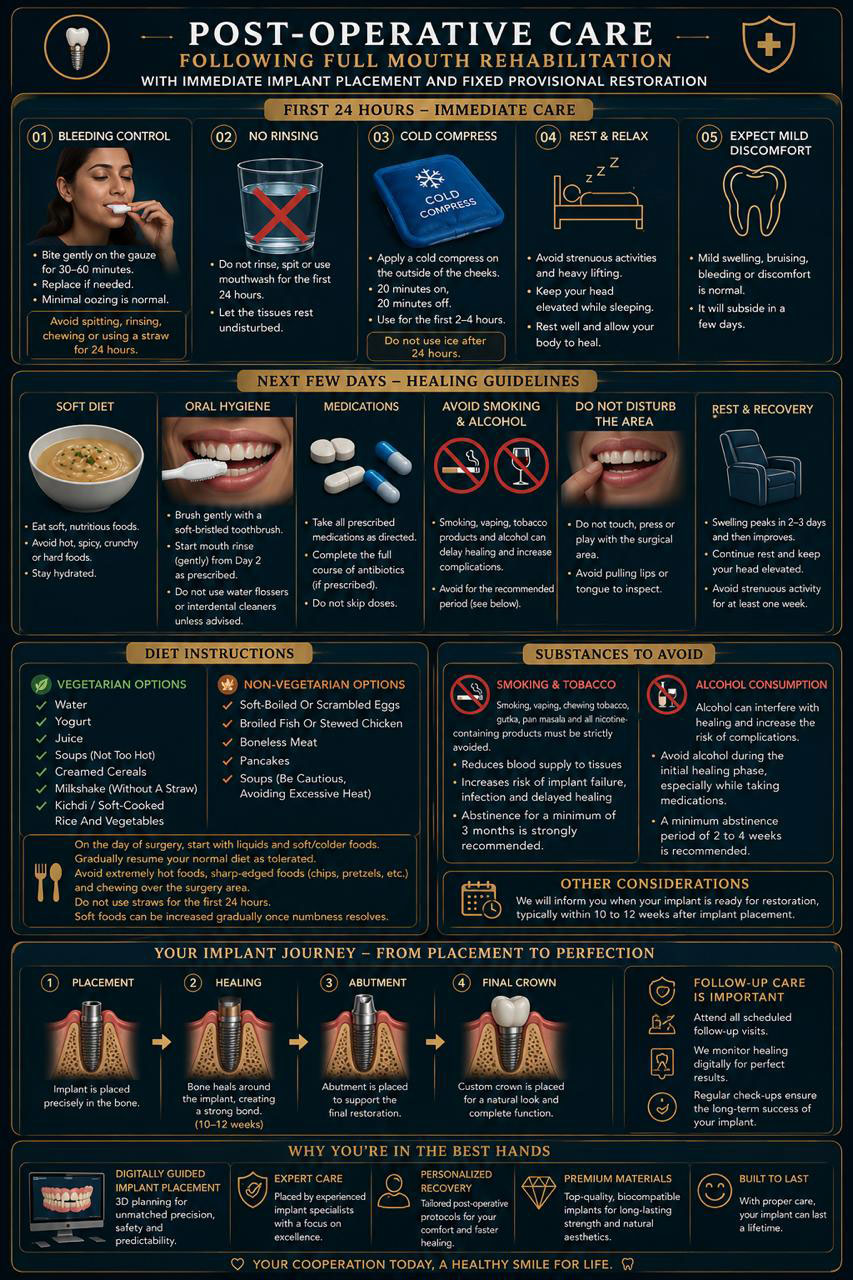
Post Operative Care Instructions Following Full Mouth Rehabilitation with Immediate Implant Placement and Fixed Provisional Restoration
Your new teeth are fixed - your implants are still healing.
The provisional restoration provides immediate function and appearance, but the implants beneath it require a protected healing period to integrate securely with the jawbone. Care during these first weeks is critical.
First 24 Hours: Protect the Surgical Sites
Some oozing or minor bleeding may occur during the first 24 hours. If advised, maintain firm pressure with gauze over the surgical area. Avoid vigorous rinsing, spitting, using a straw, forceful chewing or repeatedly pulling the lips/cheeks to inspect the surgical sites.
Swelling commonly increases during the first two to three days. Use external ice packs during the first 24 hours as instructed, keep your head elevated when resting, and avoid strenuous activity, heavy lifting and excessive bending for at least one week.
Diet: Protect the Implants While They Integrate
A strict soft diet is essential during the healing phase. For approximately 8-12 weeks, or until your dentist advises otherwise, choose foods that require minimal chewing such as yogurt, soft rice/khichdi, eggs, paneer, pasta, mashed vegetables, soft fish and soups that are not excessively hot.
Avoid nuts, chips, hard bread, ice, chewing gum, tough meat and other hard, crunchy, sticky or chewy foods. Do not test the strength of the provisional teeth. Excessive biting forces can compromise implant stability during healing.
Oral Hygiene:
Do not rinse vigorously during the first 24 hours. From the following day, use the prescribed mouth rinse gently as directed. Brush carefully with a soft-bristled toothbrush around the prosthesis and accessible areas. Do not use a water flosser or interdental cleaning device around fresh surgical sites unless specifically advised by SR Dental Zone.
Medications:
Take prescribed medications exactly as instructed. If antibiotics have been prescribed, complete the course as directed unless your treating doctor advises otherwise. Take pain-relief and anti-inflammatory medication according to your prescription and do not take medication to which you are allergic or have been medically advised to avoid.
Smoking, Nicotine & Alcohol:
Smoking, vaping, chewing tobacco, gutka, pan masala and other nicotine-containing products can adversely affect blood supply and healing around implants. The source instructions recommend avoiding these products for a minimum of three months. Alcohol should be avoided during the initial healing phase, particularly while taking prescribed medication; the source guidance recommends abstinence for two to four weeks.
Adapting to Your Fixed Provisional Teeth:
Temporary changes in speech, increased salivation, mild pressure, a sense of fullness, or minor cheek/tongue irritation can occur while you adapt to the new prosthesis. These usually improve with time. The provisional restoration is designed to support the healing phase and should be treated carefully until definitive rehabilitation is appropriate.
Important: the provisional restoration is fixed, but it is not permission to chew normally.
Protecting the implants from excessive force during osseointegration is one of the most important things you can do during recovery.
When to Contact SR Dental Zone:
Please contact the clinic promptly if you experience:
- Excessive or persistent bleeding
- Rapidly increasing swelling
- Fever or signs of infection
- Persistent foul taste or discharge
- Severe pain not relieved by prescribed medication
- Any looseness, movement, chipping or fracture of the provisional restoration.
Urgent medical attention
Difficulty breathing or swallowing can require urgent assessment. Seek emergency medical care without delay and inform SR Dental Zone.
Your Follow-Up Journey:
Within 72 hours: Your first review appointment should be scheduled within 72 hours of treatment completion.
During healing: Further reviews are advised according to your clinical progress. These appointments allow assessment of soft-tissue healing, the provisional restoration, bite and implant integration.
Before definitive restoration: The timing of the final rehabilitation is determined clinically. SR Dental Zone's website notes that implant restoration is commonly considered after an integration period of approximately 10-12 weeks, but your individual timeline may differ.
Why Follow-Up Matters:
Full mouth rehabilitation is more than replacing teeth. It involves restoring function, bite stability, esthetics and long-term oral health. SR Dental Zone's full-mouth rehabilitation philosophy combines implant reconstruction, bite analysis, digital planning and CAD/CAM restorative workflows where clinically appropriate. Follow-up allows these elements to be monitored as healing progresses.
After the Initial Healing Phase:
Once your surgical team advises that healing is adequate, cleaning and maintenance will gradually transition from surgical-site protection to long-term implant and prosthetic care. Your team will demonstrate the appropriate hygiene aids and advise when water flossing or interdental cleaning can safely begin.
Important Reminders:
1. Schedule your first review within 72 hours of treatment completion.
2. Attend all subsequent review appointments recommended by your treating team during the implant-healing phase.
3. Maintain the prescribed soft diet and do not test or overload the fixed provisional restoration during healing.
Individual Healing Matters:
Recovery time, diet progression, hygiene methods, medication and the timing of definitive restoration vary according to implant stability, surgical complexity, tissue healing, bite and overall health. Your personalised instructions from the treating clinician take priority.


